🔥 Keeps React and React-Native experts up to date! Join 34k+ devs for one email per week.
⚛️ This Week In React #260: TanStack, Actions, Immer, RTK, Streamdown, XState Store, ReScript, HTML streaming | Vercel v0, Worklets, Skia, Tailwind, Native Stack, Gifted Chat, Enriched | TC39, Playwright, Bun, Astro, Better Auth
|
Hi everyone! Kacper and Tymek from Software Mansion here! 👋 This week, TanStack Pacer debuts in Beta, a new framework-agnostic library for controlling function timing with a dedicated React adapter. Lots of interesting articles featuring a 20,000x improvement in TanStack Router route matching algorithm speed, tips to speeding up Next.js on Kubernetes, and a tutorial for React 19 Actions for better component responsiveness. On the React Native side, we'd like to highlight an incredibly detailed blog post on Vercel's breakdown of building the v0 iOS app. Enjoy the read! As always, thanks for supporting us on your favorite platform:
💸 Sponsor
Why is internationalization so hard? How do you set up i18n in Next.js so it feels built-in — not bolted on? In learn.next-intl.dev, Jan Amann (maintainer of next-intl) distills years of hard-won lessons into practical patterns you can apply today:
Now 25% off exclusively for This Week In React subscribers!
⚛️ React
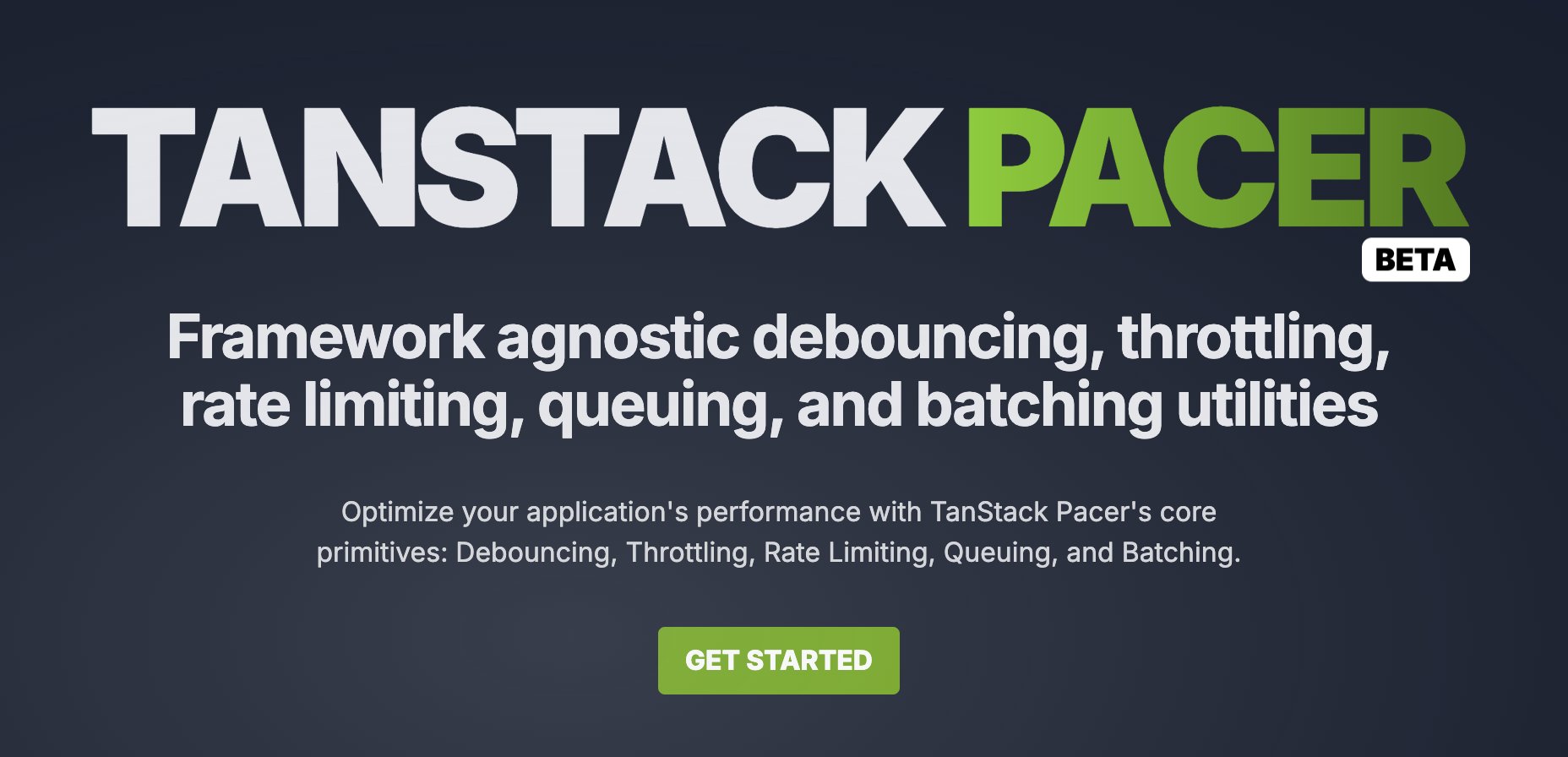
TanStack Pacer is now in Beta A new framework-agnostic library has just landed from the TanStack hands. It offers high-quality utilities for controlling function execution timing, including debouncing, throttling, rate limiting, batching, and more. It provides a dedicated React adapter ( You can read more about the TanStack Pacer's adapter for React here.
💸 Sponsor
Slow And Janky Data Grids Suck. LyteNyte Grid Doesn't. Frustrated with janky data grids that break down at scale, dictate your architecture, and waste hours on messy workarounds? Unleash unmatched grid speed with LyteNyte Grid! The 40kb data grid that handles 10,000 updates per second, renders millions of rows, and offers 100+ advanced features ranging from server data loading to tree views. Built in React for React, it can be headless or pre-styled, and our declarative API means no more awkward integrations or workarounds. LyteNyte skips the wrappers and delivers pure performance. See LyteNyte Grid in action today
📱 React-Native
Vercel - How we built the v0 iOS app A detailed technical breakdown of the challenges they had to overcome to create a high-quality React Native app. The article is packed with visual explanations and code snippets of common RN headaches related to keyboard handling, lists, text input, and animations.
🇫🇷 En français
🔀 Other
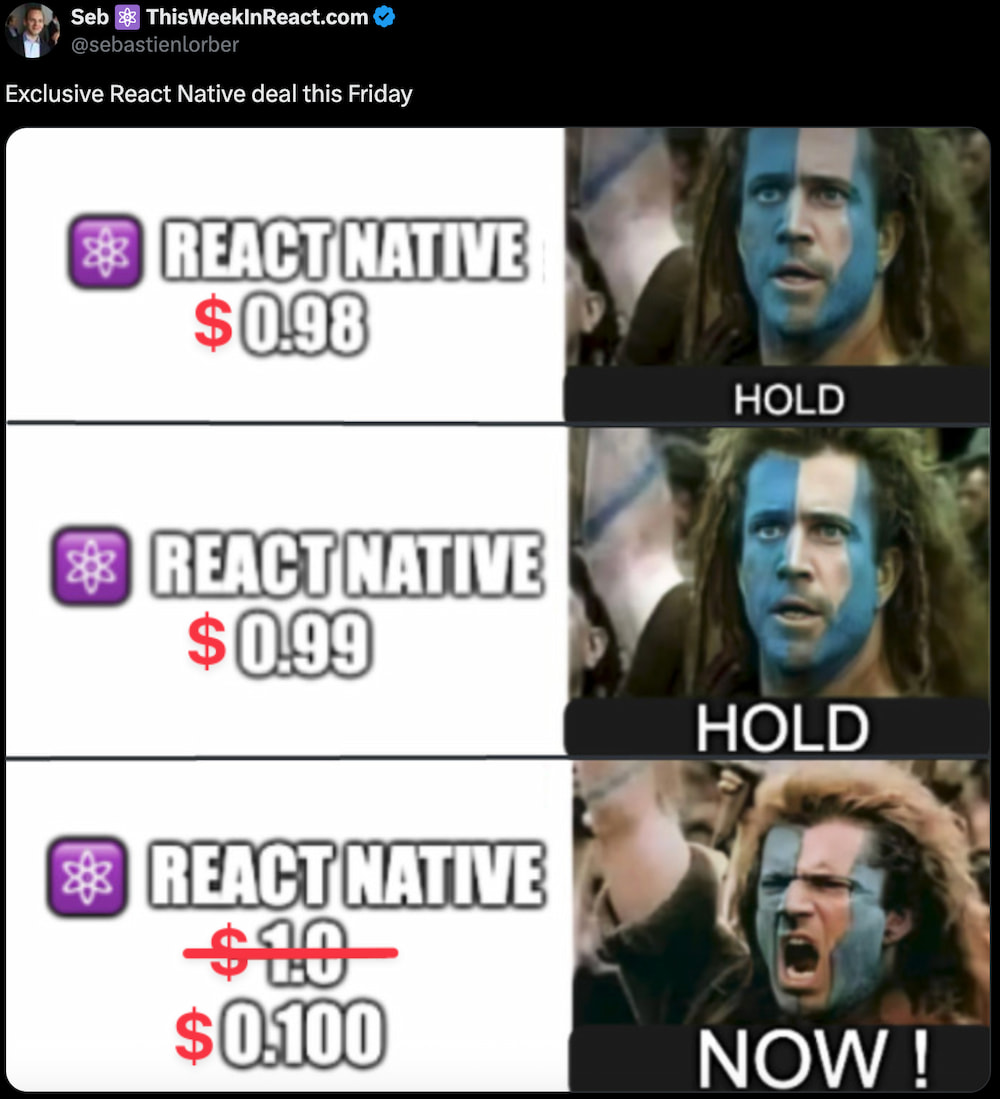
🤭 Fun
See ya! 👋 |




⚛️ This Week In React
🔥 Keeps React and React-Native experts up to date! Join 34k+ devs for one email per week.

🌐 Read Online Hi everyone! Filip and Krzysztof from Software Mansion here! 👋 It’s been another challenging week for the React ecosystem. Developers worldwide have been rushing to update their React versions to patch two new vulnerabilities. This serves as a good reminder for all of us to prioritize security during testing. Fortunately, React Native remains mostly unaffected by these threats, as Server Components aren’t yet widely used in the mobile environment. We are taking a well-deserved...
🌐 Read Online Hi everyone! This week, it remains important for me to raise awareness about the React Server Components vulnerability, since an exploit is now widely available. Thankfully, we also have more positive React content to check with Fate, TanStack Alpha, React Grab, and more. It’s even hotter on the React Native side. We were patiently waiting for 0.83 to publish 😇 and it’s now out. You can now use <Activity> in React Native 🔥. Reanimated 4.2 is also out with Shared Elements...
🌐 Read Online Hi everyone! A major React 19 Server Functions vulnerability has just been disclosed. Make sure to upgrade your React 19 or meta-framework ASAP! On the mobile side, we have more positive news: RNRepo should speed up our React Native builds even more, and Shared Elements Transitions are coming soon! (unlike React Native 1.0 😅) Don’t forget to answer the State of React 2025 survey while it’s still open! As always, thanks for supporting us on your favorite platform: 🦋 Bluesky ✖️ X...