This week Vercel released the UI SDK: headless behaviors that your agent combines to build your own components. We also have an interesting experiment to stop sending static RSC markup twice. Also, various interesting releases such as Fate 2.0, React Flow 13, React Virtualized 10.
On mobile, Expo launched Cloud Simulators that any agent can drive, and Exact introduced its build and install services.
Elsewhere, Solid 2.0 is finally out. Webpack now handles CSS and HTML natively. Node.js experiments with green threads.
Factory, Exa, and Bolt connected their coding agents to Sentry so production errors turn into fix PRs, not tickets. See how they did it, then use the recipes for Claude Code, Cursor, or Copilot to build your own.
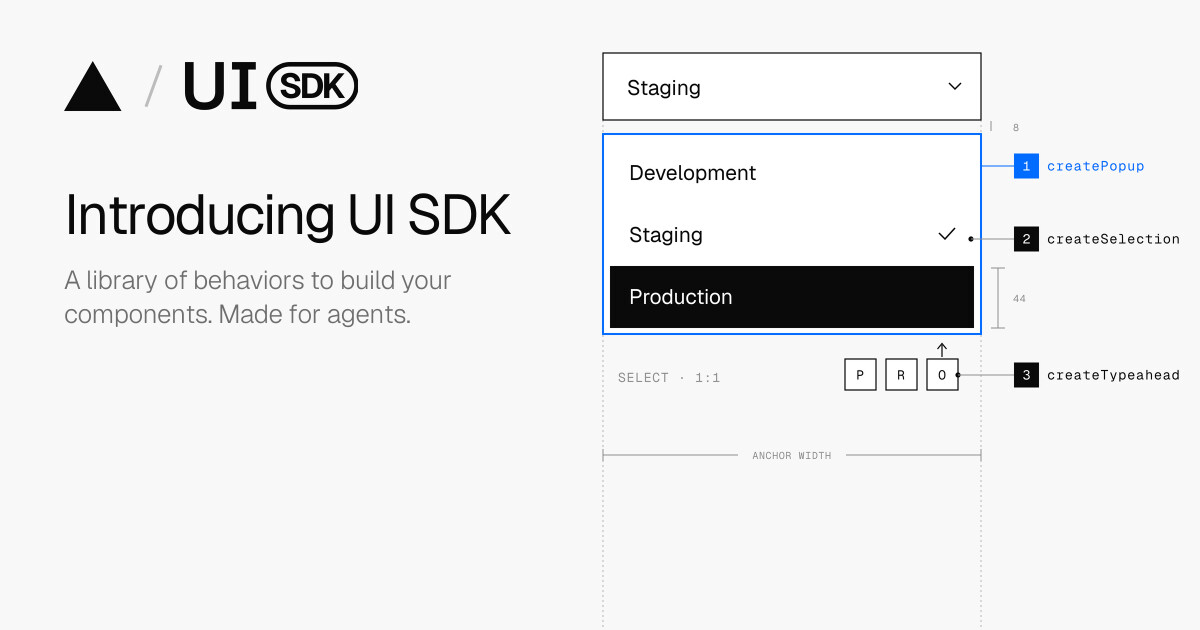
This new SDK includes 50+ accessible, composable behaviors like createPopup, createTypeahead or createRovingFocus. Your agent combines them to build your own components. It also ships 50+ unstyled components for React, Vue, Svelte, Solid and Web Components. And agents can use the UI too: with createAgent() or WebMCP, they read the page and press, type and pick directly, without screenshots.
It's not the first time we've seen behaviors extracted out of component libraries: React Aria has headless hooks, and Chakra UI has Zag state machines. But this one looks quite promising, in particular for the agentic era.
👀 HTML-first React - An unofficial experiment to stop sending static Server Component markup twice - An attempt to solve one of the things I like least about RSCs. On first load, an RSC page sends its static content twice: as HTML, and again in the Flight payload. This experimental React fork adds a flag to remove the static content from the Flight payload. It's tested with patched Next.js and Waku versions, and handles about 3x more requests per second on a big table page.
📜 How we're using AI to make Next.js more secure - AI made vulnerabilities cheap to find, leading to 51 advisories this year. Every Next.js PR now gets an adversarial security agent review. Run npx next@canary upgrade --agent to let your coding agent move your app to the latest safe release.
📜 Remix v3: Fast Pages, Thin Ecosystem - Comparing Remix v3 to TanStack Start after building the same real estate app in both frameworks. Performance is similar, but the authors still recommend TanStack Start for most projects. What they missed most in Remix is the integration with common tools, like Vite plugins (for Tailwind) and Vitest.
📜 The Invisible Shape - An interactive deep dive into how sub-menus stay open while your cursor moves diagonally, with a playground comparing every approach. From the Mac's 1980s algorithm and Amazon's patent to the safe triangles of Base UI and React Aria. An OpenUI discussion suggests browsers may eventually handle this algorithm natively.
📦 Dragology - Declarative drag-and-drop for React SVG interfaces - Pushes the state of the art with its declarative dragging concept. Instead of writing imperative drag handlers, you list the states an element can be dragged to, and the library does the rest: smooth movement, snapping and animations.
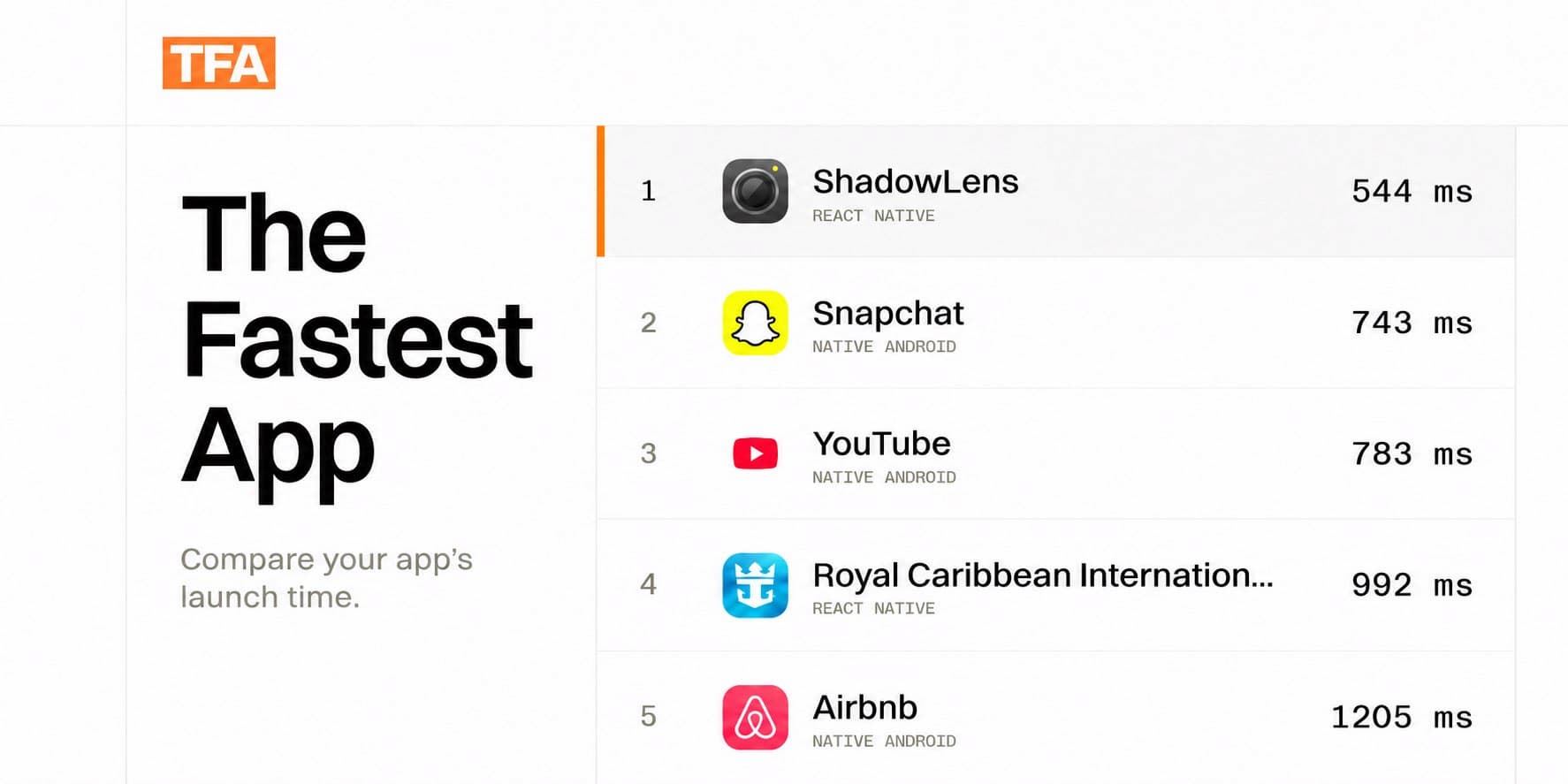
Think your app launches fast? Put it to the test with The Fastest App. Android apps are tested on real devices in AWS Device Farm and ranked on a public leaderboard. A vision model analyses cold-start recordings frame by frame to identify the first recognisable screen after the splash screen (FCP) and when the main content is loaded and transitions settle (LCP). Results are averaged across runs, with CPU, RAM and FPS also measured. To get started, submit your Google Play app with at least 1,000 downloads, verify developer access and review the setup recording. You can also request automatic retesting and reports for each new release to track improvements and spot regressions.
Coding agents are becoming the primary users of our development tools, and the infrastructure is being rebuilt around them. The bottleneck is no longer writing code: it's verifying, building, and shipping it.
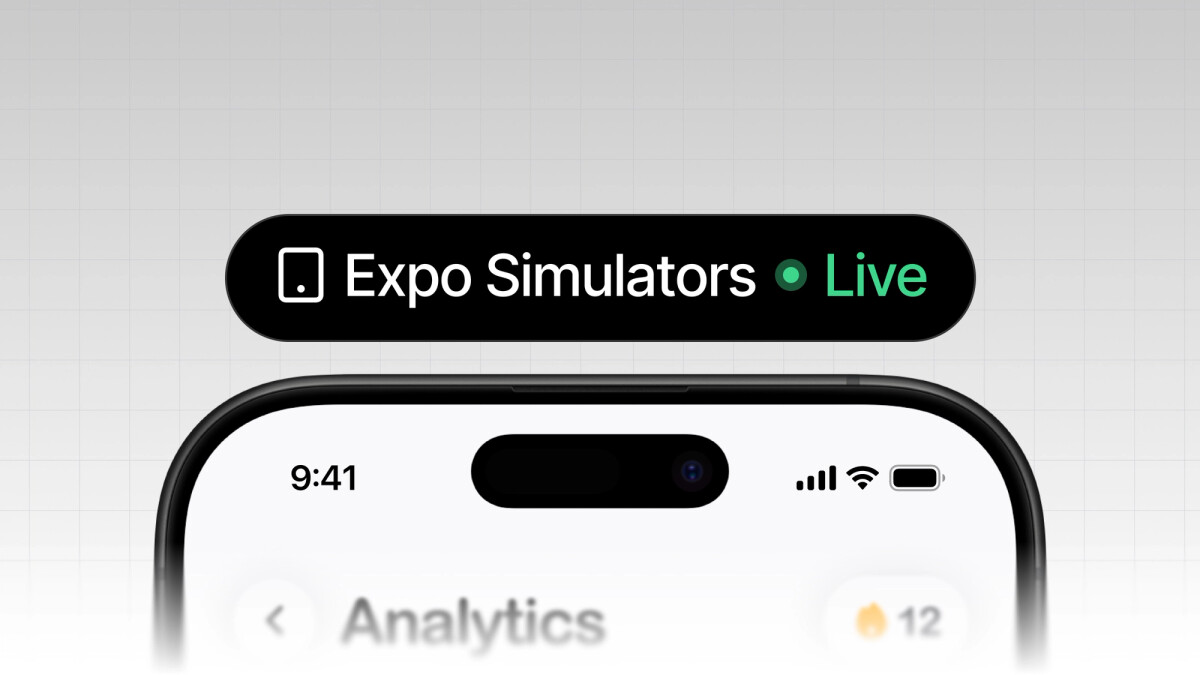
Expo just launched Expo Simulators: cloud iOS Simulators and Android Emulators that any agent can drive. Each session runs on an isolated VM so parallel agents never collide, and streams live to the browser where you can watch or take over.
Key callouts:
Proof on the PR - every session ends with a recording, screenshots, and logs the agent can attach, so instead of skimming a diff and trusting it looks right, the reviewer watches the change working.
Agents with eyes - an agent can run the app it just built, spot visual issues like overflowing labels, and fix them in the same session.
Runs where agents run - sessions start from cloud sandboxes, CI, or Linux and Windows machines, and self-terminate on timeout.
Framework-agnostic - any app that builds for a simulator runs: Expo, SwiftUI, Flutter, Unity, or anything else.
Exact, the new agent-native Rust framework from Expo, introduced two services in alpha: Exact Build, a high-speed Linux-based iOS build service, and AppDrop, which signs and installs any iOS app. Together with Expo Simulators they close the loop: an agent takes an issue, writes the code, builds it, verifies it on a cloud simulator, and ships it to your phone, while humans move up to reviewing evidence.
📜 Hello, Graphite: WebGPU - One shared Dawn device for Skia, Three.js, and ML: draw 3D scenes on Skia canvases, use Skia art as Three.js textures, and run models on camera frames.
💬 npm RFC - Package Variants - Now that package managers no longer run install scripts by default, a new variants field would let package managers pick the right prebuilt binary and link it directly, with no install script and no Node.js shim.
📣 Webpack - CSS and HTML Are Built In - Webpack 5.109 unlocked native CSS, CSS Modules and HTML entries. Various loaders or plugins are now deprecated.
📜 Your JS Error Is Lying to You - All the things to consider when dealing with JS errors, covering cause chains, stacks, serialization, cycles, aggregates and more.
🌐 Read Online Hi everyone, Seb and Jan here 👋! This week, X explained how it rebuilt its flagship app with streaming SSR, Suspense and Relay. e18e launched independent benchmarks for 9 meta-frameworks. On mobile, Discord follows Shopify and leaves React Native for native and Rust. Meanwhile, Expo’s co-founder previewed Exact, an agent-native app framework written in Rust. We also have many releases: Audio API 1.0, Bottom Sheet 0.18, Keychain 11, Gesture Handler 3.5… Elsewhere, Node.js shipped...
🌐 Read Online Hi everyone, Seb and Jan here 👋! Calm week on the React side, but we found a few interesting Next.js PRs to look at and a few Async React blog posts. On mobile, the first React Native 0.89 RC is here, with lots of performance work. Amazon Vega OS 2.0 brings RN 0.83 to every Vega-powered Fire TV. Hermes gets a full Intl implementation, still in preview. Screens v5 is coming. Elsewhere, GitHub Actions will block pull_request_target by default. Node.js 27 is the first alpha of the...
🌐 Read Online Hi everyone, Seb and Jan here 👋! This week is full of TanStack releases with Redact, AI, and DB. Redact is a smaller, synchronous version of React. On mobile, it's an interesting week for native desktop app development and Nitro. Expo founders are cooking something new 👀. Node v26 is now LTS. SWC’s next version is much faster. Bun now ships a code formatter. Let's dive in! 💸 Sponsor Prioritize Your PR Queue Review the PR that matters most. CodeRabbit Triage ranks work across...